
CPalius: a platform for enterprise content and business applications
From content sites to CRM, ERP, booking and admin panels, the parts every application needs are ready in the core: identity, access control, multilingual support, audit trail, multi-tenancy, backup and recovery. You only write the module for your business.
- A core that never dies: a broken module is quarantined and the admin panel stays up
- Secure by default: capability-based access, tenant filter, CSP, WAF and two-factor in the core
- PHP 8.4+ and Symfony 7.4 LTS; no Node.js needed
What CPalius is not
A content management framework is neither a ready-made site nor an empty framework. Three misunderstandings, cleared up front.
Not a blog engine
Blog is a module, not part of the core. You can switch Blog off and put a booking system, a culture portal or a docs site in its place; the core stays the same.
Not a replacement for WordPress
We do not compete on plugin marketplace size or install count. What we offer is different: the skeleton of an application, built to be secure and auditable.
Not an empty framework
We do not hand you a blank canvas like Symfony or Laravel. Authentication, access control, the admin panel, the media library and multilingual support come ready so they are not rewritten in every project.
Two classes of entity: content and business records
We reject the “everything is a node” approach. The data model splits into two classes; what they share is the same capability model, the same Twig components, the same command line and the same config sync.
Content entities (Node)
- Pages, posts, showcases, blog
- Slug, multilingual, publish state, SEO and revisions
- Custom fields in one JSON column, queried fields in a flat index
Business records (Resource)
- Vehicles, invoices, reservations, staff
- No slug or language; a state machine (workflow) instead
- Real SQL columns: strict types, reporting, aggregate queries
One attribute, the whole platform
#[CpResource(
    name: 'vehicle',
    module: 'oto-galeri',
    capabilities: ['create', 'edit', 'delete', 'view'],
    auditable: true,
    multiTenant: true,
    workflow: 'vehicle_lifecycle',
)]
#[ORM\Entity]
final class Vehicle { … }
This one attribute registers the capabilities (vehicle.create, vehicle.edit…), derives the CRUD forms and lists, applies tenant isolation and writes every change to the audit log.
What ships in the core
Each item is explained with its reasoning and code paths in the whitepaper.
A core that never dies
Four lines of defence: a static active_modules file, a shield around module boot, a dry-run lint before activation, and a route loader that survives a broken module. A faulty module is quarantined. /aacp/recovery is a recovery console that works without the database.
Secure by default
Capability-based access that denies the unknown, a tenant SQL filter, an N+1 tripwire in development, nonce-based CSP, a blocking WAF, CIDR and timed IP bans, an HIBP password policy, TOTP two-factor in the core and a scored security audit.
Hybrid data model
Structural fields in real SQL columns, custom fields in JSON, and a flat index for queried fields. It avoids the join storm of WordPress postmeta and classic EAV.
Content platform
Field API, revisions, editorial workflow, display modes, input and output text filters and row-level access that needs no rebuild. One display definition feeds both Twig and the API output.
Real multilingual
Composite uniqueness constraints: UNIQUE(slug, locale) and UNIQUE(translation_group_id, locale). Content and interface translations, together with an AI translation module.
Extensibility
A REST API gateway, an isolated hook system, a unified cron engine, webhooks, an async queue and a Migrate API for moving from WordPress, XenForo, MyBB, Joomla and Drupal.
Operations
The AACP control desk and Studio admin panel, a signed update channel, backup management, optional security telemetry and the cp:doctor diagnostic that runs on every change.
Performance
An Origin HTML cache in the core, tagged and contextual cache invalidation, reverse-proxy purge and an AACP performance inventory.
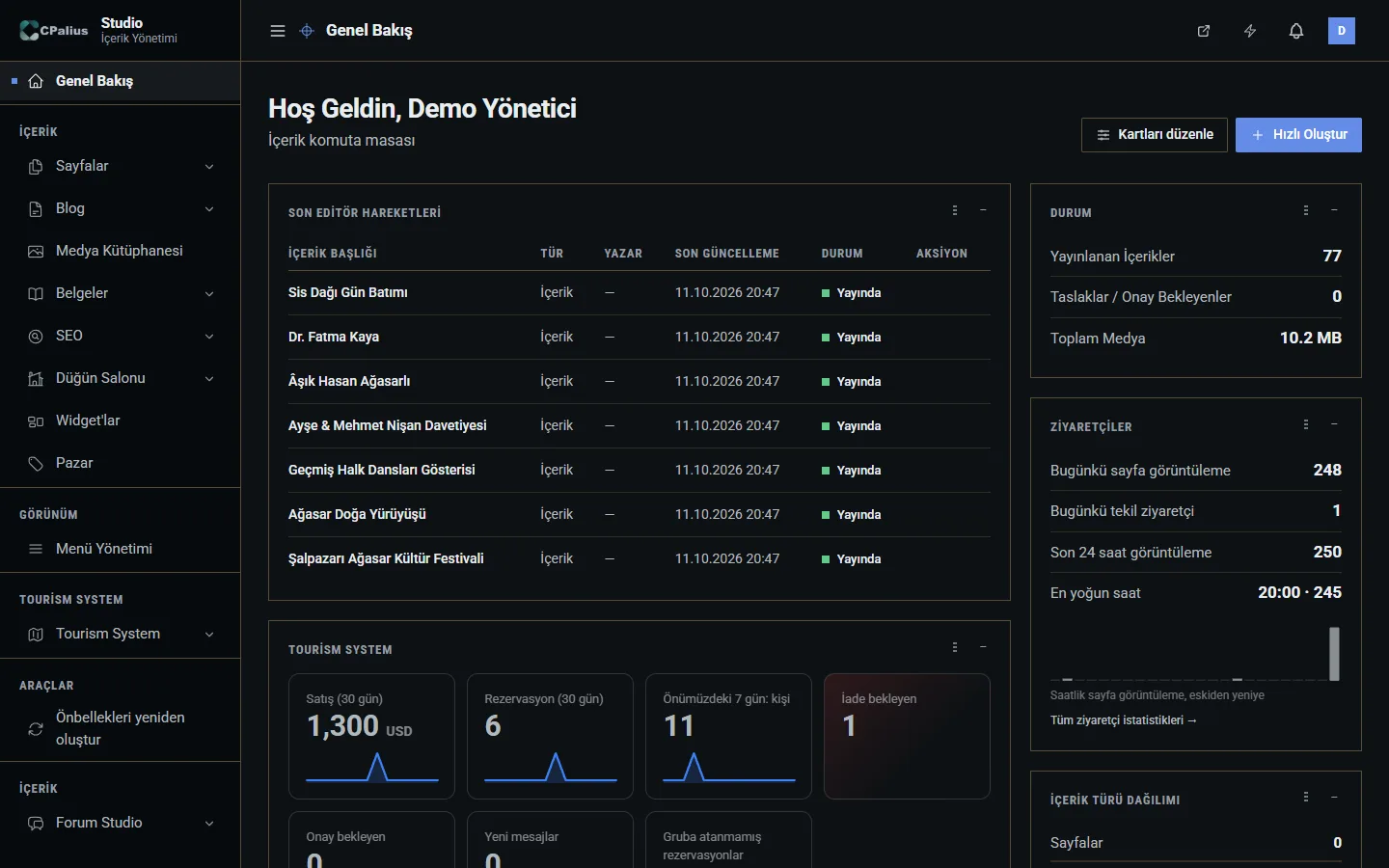
Screenshots


Comparison: against Drupal, TYPO3, WordPress and ProcessWire
A framework is chosen on evidence, not adjectives. The scorecard below is our own assessment, published uncorrected in the whitepaper, including the rows where we are behind. Scale: D none, C primitive, B partial, A mature, A+ best in class, A++ ahead of the field.
| Capability | CPalius | Drupal | TYPO3 | WordPress | ProcessWire |
|---|---|---|---|---|---|
| Core that never dies / module isolation | A+ | B | B | C | B |
| Secure by default (capability access, tenant, N+1, XSS) | A++ | A | A | C | A |
| Row-level access | A+ | A+ | B | C | B |
| Cache API (tags, contexts, reverse-proxy purge) | A++ | A+ | A | C | B |
| Async queue and notifications | A++ | B | B | B | C |
| Admin UI and recovery console | A+ | A | A | A | A |
| Security telemetry and IP bans (in the core) | A | C | C | C | C |
| Entity and Field API | B | A+ | B / A | C | A |
| Multilingual: content and interface | A | A+ | A+ | C | A |
| Multisite / organisations | C | A | A+ | A | B |
| Release policy and backward compatibility | D | A+ | A+ | A++ | A |
| Documentation | C | A+ | A+ | A+ | A+ |
| Package ecosystem | D | A+ | A | A++ | B |
| Performance evidence (published benchmark) | D | B | B | C | A |
Where we are behind is explicit: the package ecosystem, release policy, a published performance measurement and multisite support. The documentation row is the whitepaper’s assessment; current docs live on cpalius.com. The full table has 40 rows and sits in the whitepaper with its reasoning.
Software built on CPalius
One core, different industries. Each piece of software runs as a separate module and theme.
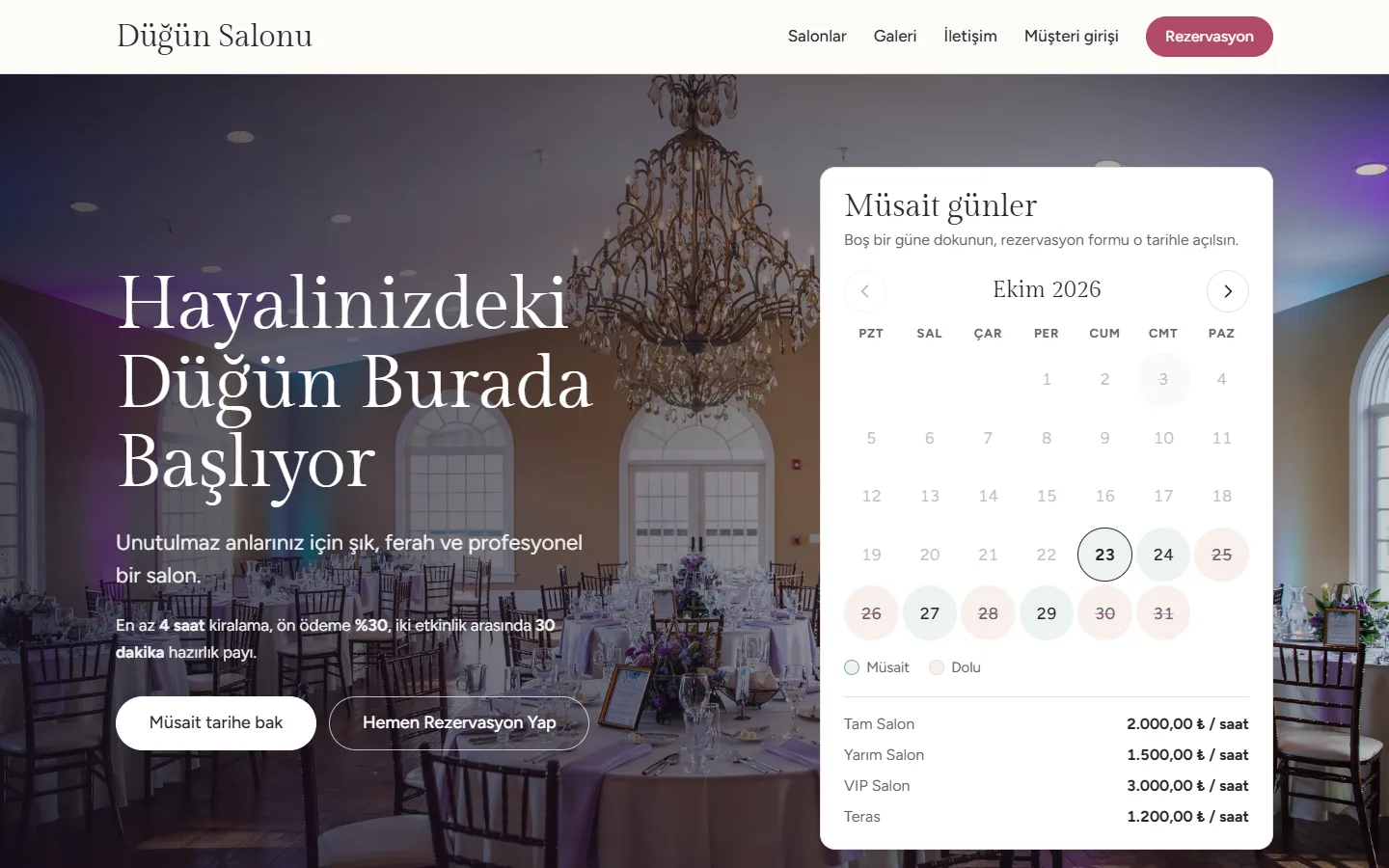 Wedding Hall
A reservation website for wedding halls: hall pages, availability calendar, couple portal and payment tracking.
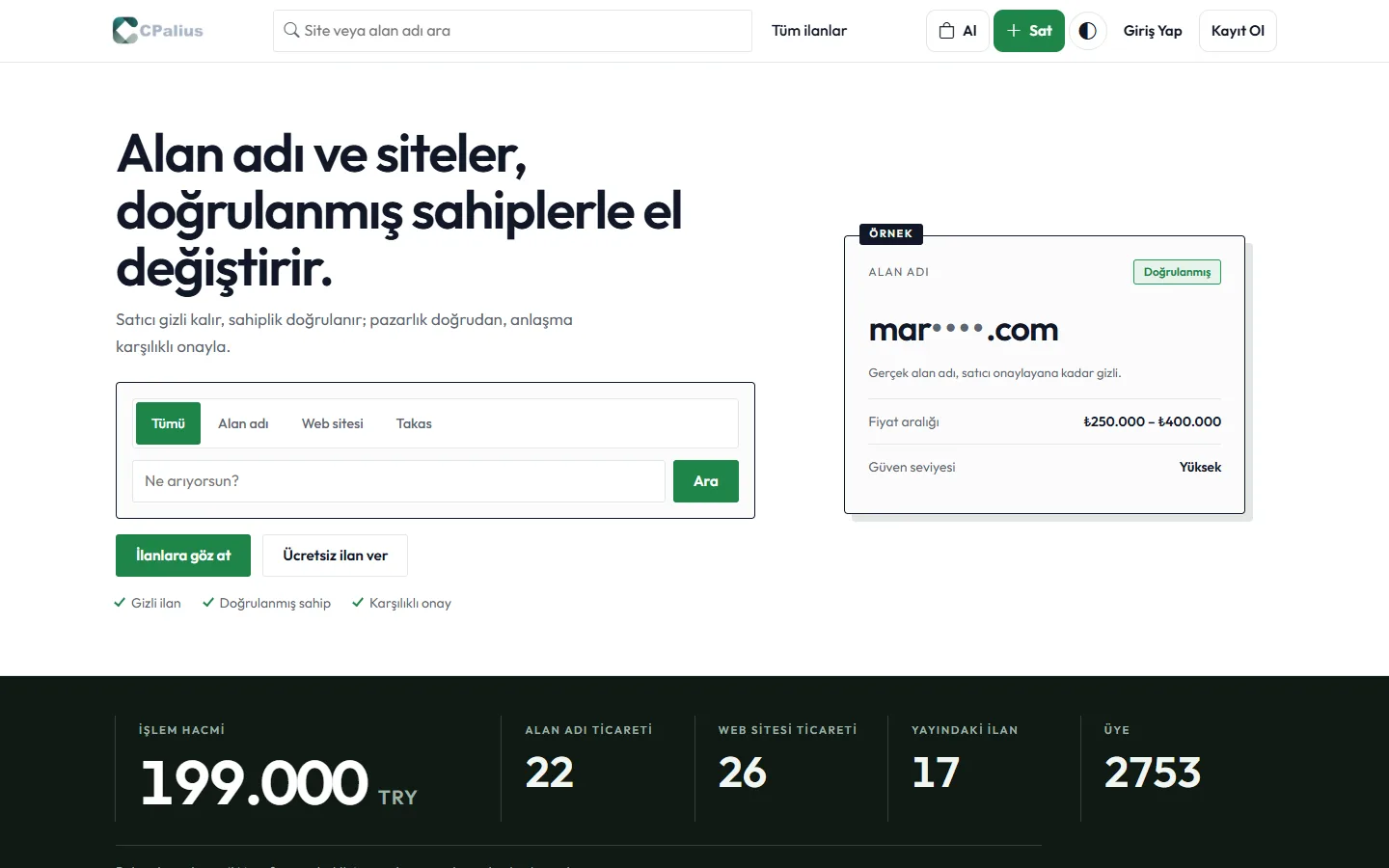 Marketplace
A peer-to-peer marketplace for buying and selling websites and domains: blind listings, ownership verification, offers and swaps, trust score.
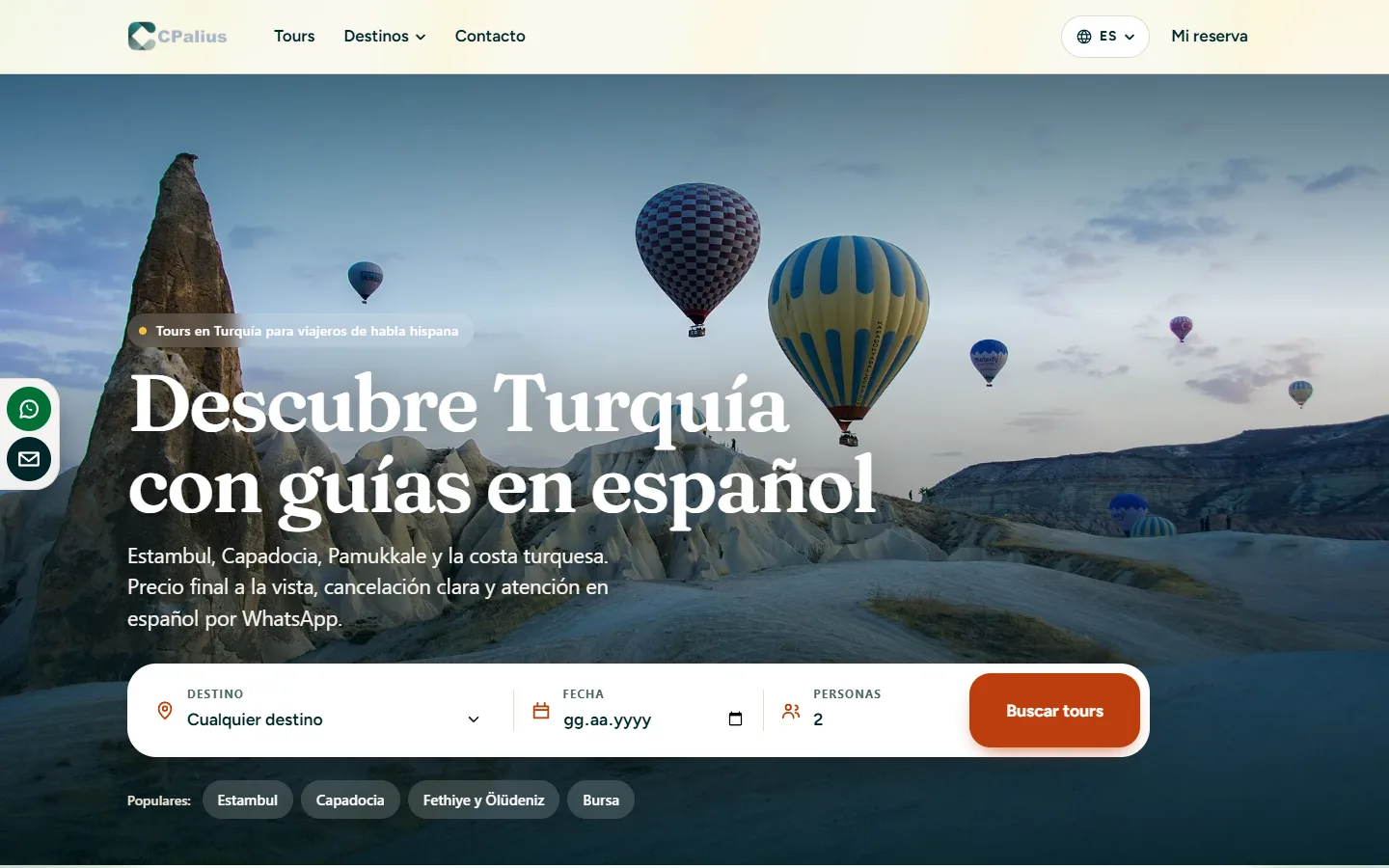 Tours
Tour catalogue, departures, bookings and a customer area for tour operators. Comes with the Ruta theme.
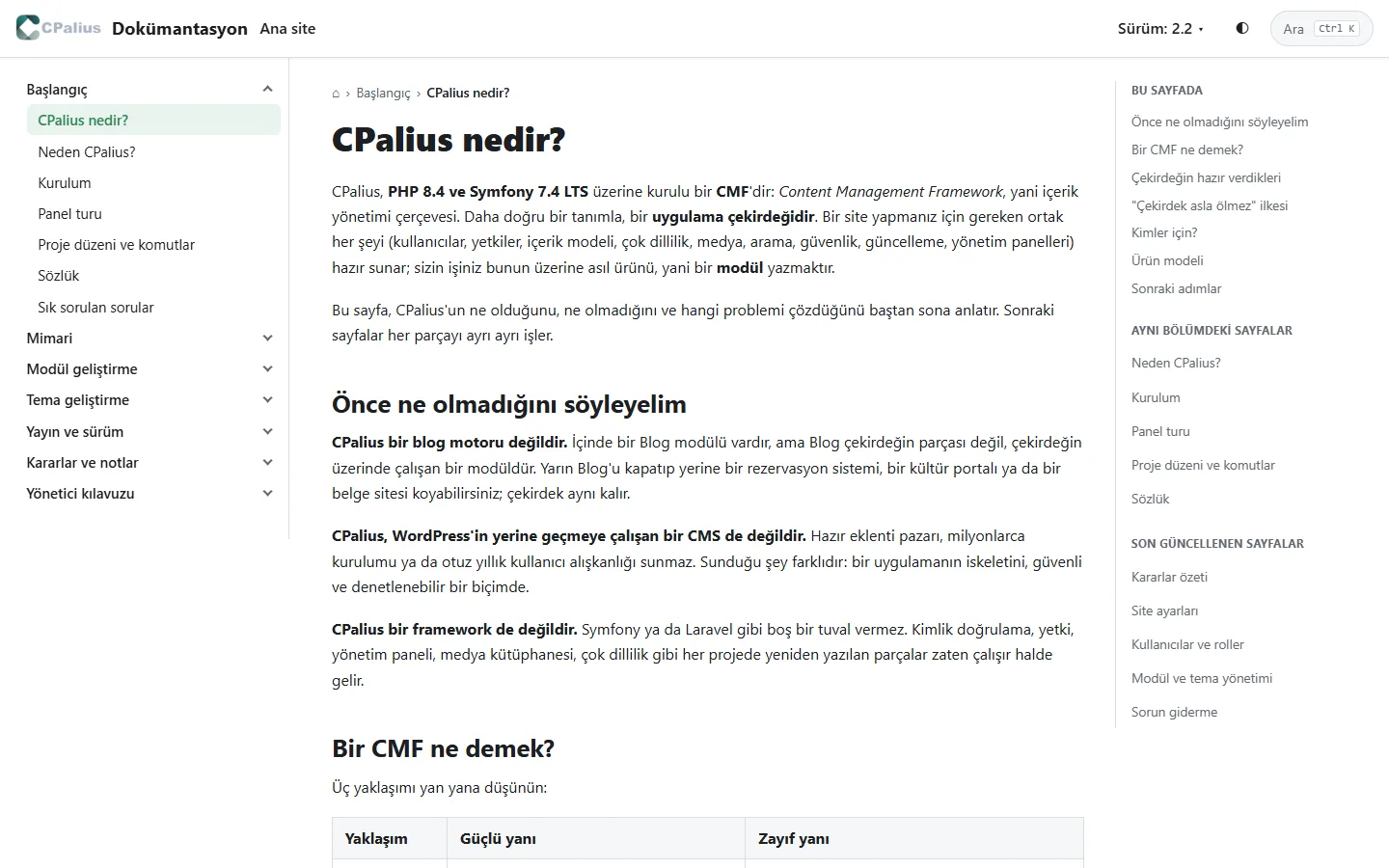 Docs
A versioned, multilingual, Docusaurus-style documentation site: Markdown and HTML pages, translation desk, search and dark theme.
Technology and requirements
Runtime
PHP 8.4+, Symfony 7.4 LTS, Doctrine ORM
Database
MySQL 8+ or MariaDB 10.6+
Front end
AssetMapper and Tailwind standalone; no Node.js needed
Deployment
The web root is the public/ folder only; the project root stays clean (“Pristine Root”)
How do you use CPalius?
We set it up
Order a premium product and point your domain to us. We set up your site and host it on our servers.
Install it yourself
If you already run CPalius, take only the module and theme files you want and add them to your site.
Build your own
The module and theme development docs are public. You can build your own application on CPalius.
Read more
Whitepaper →
Architecture principles, the full comparison table and the roadmap
Docs →
Installation, module and theme development, administrator guide
GitHub →
The core’s source is open to inspection
About the licence
The core’s source is public on GitHub for inspection, evaluation and security review. Terms for production use are in the repository’s LICENSE file; contact us for commercial use.
Which application should we build on CPalius?
Describe your business and we will plan the right module and theme, or a custom build, together.